
Recipes · Fall/Winter 2026
Fall Favorites
By Robert Mazzucchelli · Founder & Chief Curator
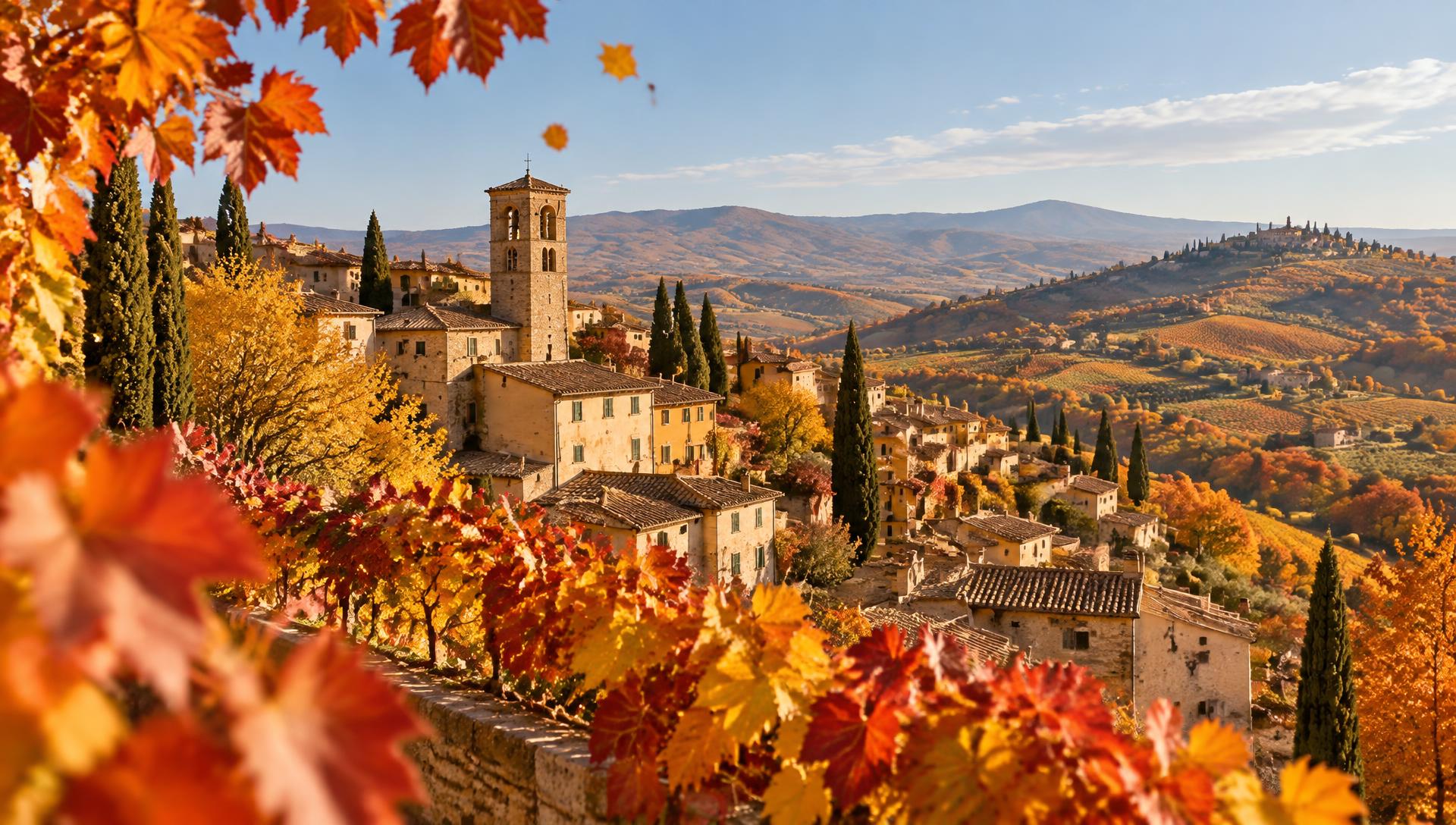
When the temperatures start to drop and the leaves start turning their beautiful autumn hues, we start craving comfort foods that we can savor with friends and family by the fire, or around a big table with ample bottles of wine and laughter.
Here are some of the recipes we will be making at home — and enjoying in a trattoria in some Italian city.
“Recipes that will make you happy the weather is getting colder.”
Tuscany · The Peasant Kitchen
Pappa al Pomodoro
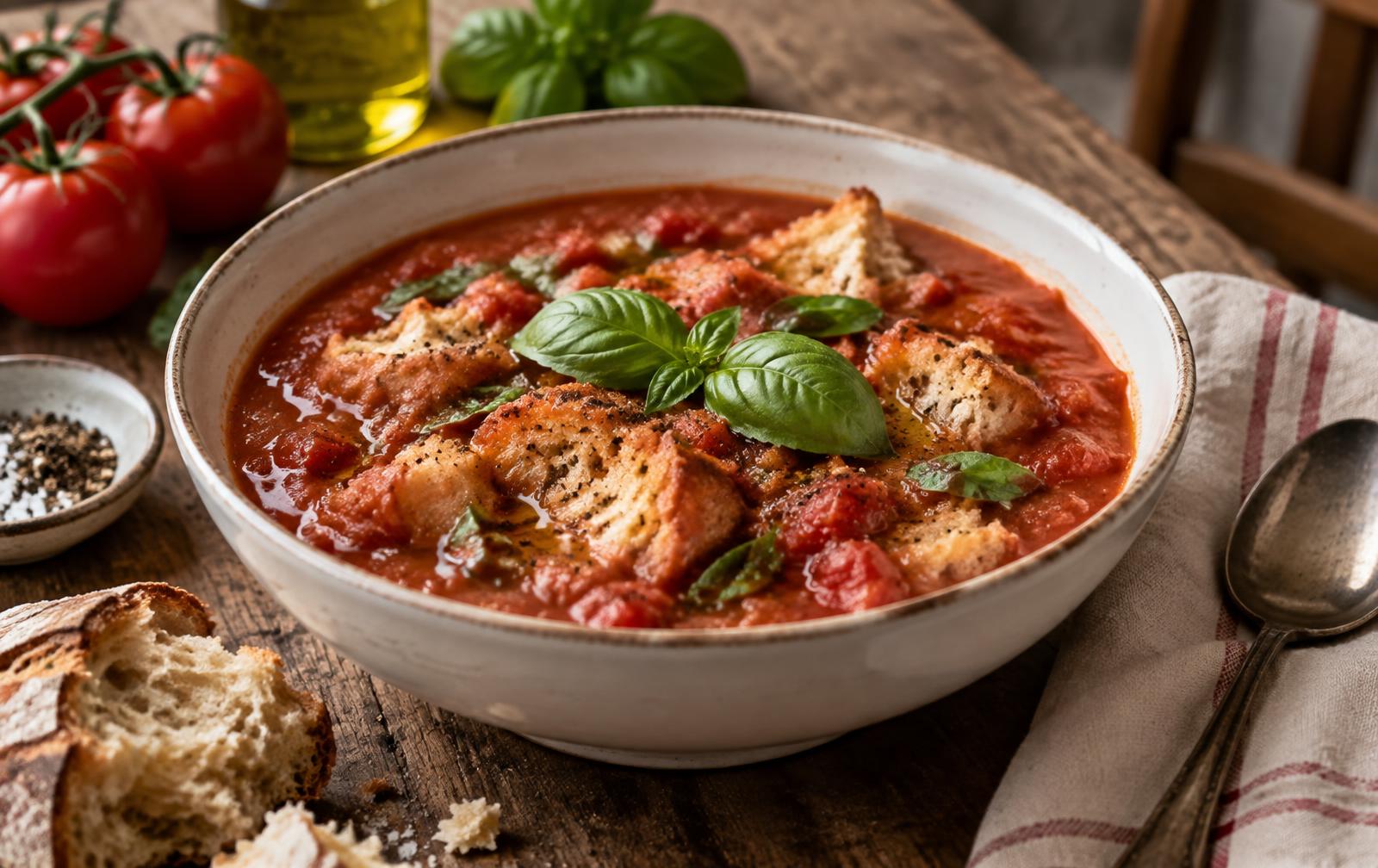
This dish (I can't really call it a soup or a stew) demonstrates the Italian propensity to not waste any food ingredients, especially stale bread. With origins as a peasant dish, the flavor harmony of a few humble ingredients makes one of the most satisfying fall dishes known. Of course it tastes especially good at your favorite trattoria in Florence, but the experience can be replicated at home with a little practice.
My recipe is a very slight adaptation of the one found in Italy: The Beautiful Cookbook by Lorenza de' Medici.
Ingredients
- Stale bread: 1 lb (450 g) crusty country bread — salt-free Tuscan style if you can find it — cut into thick slices
- Fresh tomatoes: 2 lbs (900 g) ripe plum or heirloom tomatoes, peeled, seeded, and chopped (or good-quality canned chopped tomatoes)
- Garlic: 2 cloves, peeled and lightly crushed
- Fresh basil: 1 small bunch of fresh leaves, torn
- Extra-virgin olive oil: 1/2 cup (125 ml), plus extra for drizzling
- Broth or water: 2 to 3 cups (500–750 ml) warm vegetable stock or water
- A splash of good red wine
- Salt and freshly ground black pepper to taste
- Grated Parmigiano-Reggiano to sprinkle on the finished dish
Serves four to six
Preparation
- 1Sauté aromatics.Heat the extra-virgin olive oil in a traditional deep, heavy-bottomed saucepan over medium heat. Add the crushed garlic cloves and sauté until fragrant and lightly golden, being careful not to burn them.
- 2Simmer tomatoes.Add the chopped fresh tomatoes and a pinch of salt and pepper, then a splash of red wine. Cook down for about 10 to 15 minutes until the tomatoes soften and release their juices into a rich, pulpy sauce.
- 3Add liquid and bread.Pour in 2 cups of the warm vegetable stock or water. Layer the slices of stale bread directly over the tomato mixture.
- 4Meld and simmer.Cover the pot, reduce the heat to very low, and let it simmer gently for about 15 to 20 minutes. Stir occasionally with a wooden spoon, mashing the softening bread into the tomato liquid until it forms a thick, uniform, porridge-like consistency. If it becomes too dry, splash in the remaining stock.
- 5Rest and finish.Remove the pot from the heat and stir in the fresh torn basil leaves. Cover and let it rest for 10 to 15 minutes off the heat so the flavors fully develop.
- 6Serve.Drizzle generously with raw extra-virgin olive oil and a sprinkle of Parmigiano-Reggiano right before serving.
Tuscany · The Second Life of Bread
Ribollita
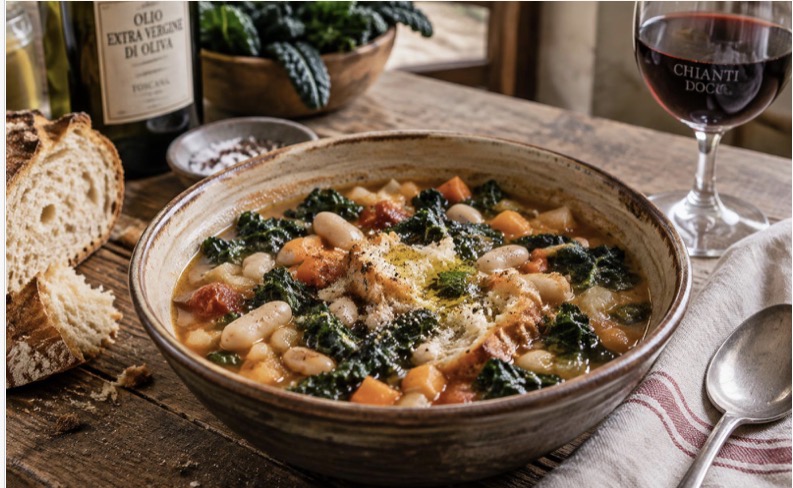
If pappa al pomodoro is the summer garden rescued from waste, ribollita is the winter one. The name means re-boiled, because the dish was traditionally made from yesterday's bean and vegetable soup, layered with stale bread and brought back to the fire the following day. It is heavier, darker and deeper than its tomato cousin — a bowl you eat with a spoon standing upright in it.
Cavolo nero is essential; nothing else gives that faintly bitter, iron-rich backbone. Make it a day ahead if you can. It genuinely improves overnight.
Ingredients
- Cannellini beans: 1 lb (450 g) dried, soaked overnight (or 3 cans, drained)
- Cavolo nero (Tuscan kale): 1 large bunch, ribs removed, roughly chopped
- Savoy cabbage: 1/4 head, shredded
- Swiss chard: 1 small bunch, chopped
- Soffritto: 1 onion, 2 carrots, 2 celery stalks, all finely diced
- Garlic: 3 cloves, sliced
- Tomatoes: 1 cup (250 g) peeled plum tomatoes, crushed
- Stale bread: 8 thick slices of country bread
- Extra-virgin olive oil: 1/2 cup (125 ml), plus plenty for finishing
- Broth: 8 cups (2 L) vegetable stock or bean cooking liquid
- A sprig of rosemary, a bay leaf, salt and pepper
- Grated Parmigiano-Reggiano and a raw red onion, thinly sliced, to serve
Serves six
Preparation
- 1Cook the beans.Simmer the soaked beans in unsalted water with the rosemary, bay leaf and one garlic clove until tender, about an hour. Keep the cooking liquid. Purée half the beans and leave the rest whole.
- 2Build the base.In a large heavy pot, warm the olive oil and cook the onion, carrot and celery slowly with the remaining garlic until soft and sweet — twenty minutes, no rushing. Add the crushed tomatoes and cook down for ten more.
- 3Add the greens.Stir in the cavolo nero, cabbage and chard with a good pinch of salt. Let them collapse into the soffritto, then add the bean purée, the whole beans, and enough broth to cover generously.
- 4Simmer long.Cook at a bare simmer for at least an hour, until everything has surrendered its shape. Season boldly with salt and black pepper.
- 5Layer the bread.Off the heat, layer slices of stale bread and soup alternately in the pot or in a deep dish. Cover and let stand for at least an hour — ideally overnight in a cool place.
- 6Re-boil and serve.The next day, return it to low heat and stir until thick and unified. Serve in warm bowls with a generous thread of raw olive oil, grated Parmigiano, and a few slices of raw red onion on top.
The Founder's Favorite
Trippa, Three Ways
“Trippa reminds me of a happy childhood — eating at the family table with everyone talking at once.”
I should confess my bias plainly: tripe is my favorite dish, full stop. It is the plate I order first in any trattoria I don't yet know, because a kitchen that treats tripe with patience treats everything else with patience too. It is cheap, it is humble, it demands time, and when it is done properly it is as satisfying as anything that ever came out of an Italian kitchen.
Three cities claim it in three different registers. Florence gives it tomato and Parmigiano; Rome adds mint and pecorino; Venice takes the tomato away altogether and serves it brothy, with polenta. All three start the same way.
Before You Begin — For All Three
Buy 2 lbs (900 g) of cleaned, pre-blanched honeycomb tripe from a good butcher. Rinse it, then simmer it in salted water with a bay leaf, half an onion and a splash of white wine vinegar for 1 1/2 to 2 hours, until a knife slides through easily. Drain, cool slightly, and cut into strips about a half-inch wide. This is the foundation of every version below.
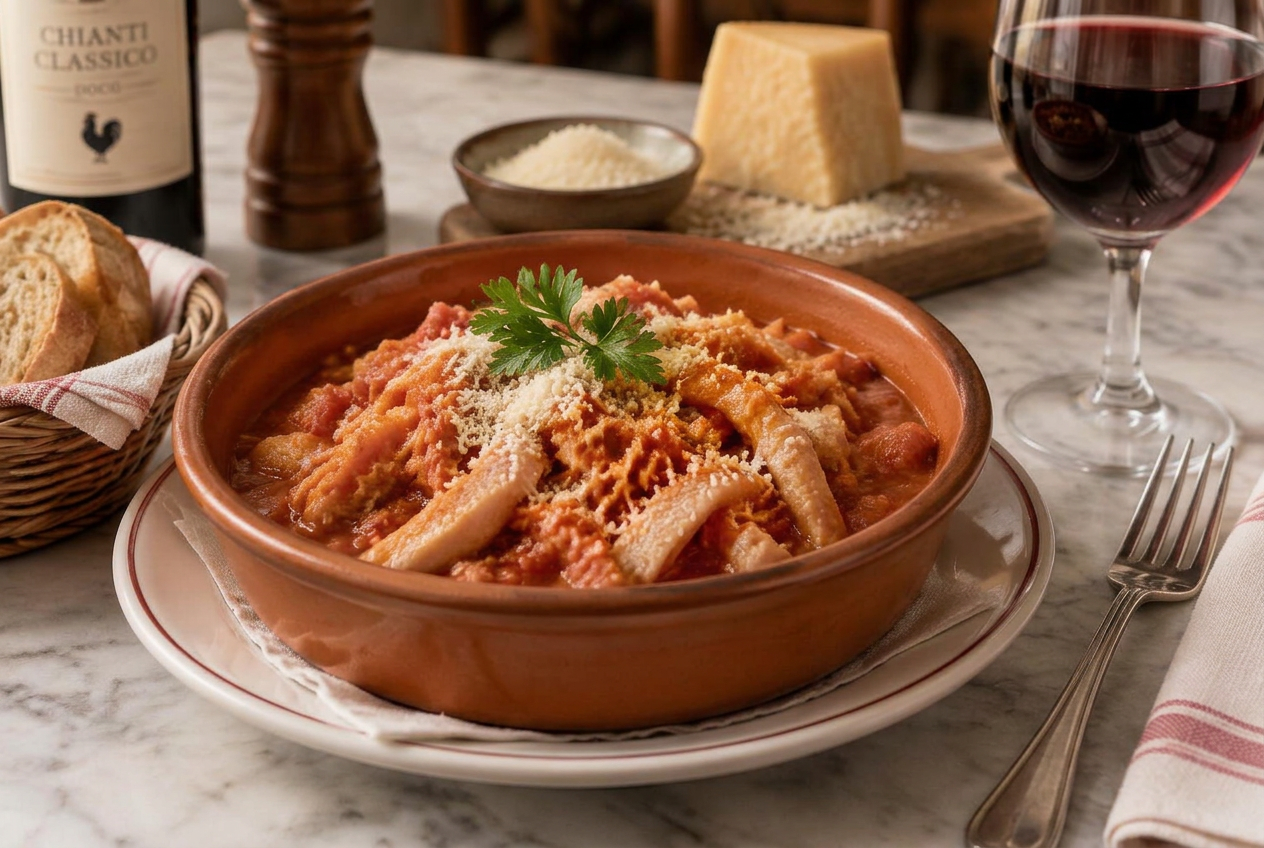
Florence
Trippa alla Fiorentina
Ingredients
- Blanched tripe: 2 lbs (900 g), prepared as above, cut into strips
- Soffritto: 1 onion, 1 carrot, 1 celery stalk, finely diced
- Garlic: 2 cloves, minced
- Tomatoes: 2 cups (500 g) peeled plum tomatoes, crushed
- Red wine: 1/2 cup (125 ml)
- Extra-virgin olive oil: 4 tbsp
- Fresh parsley, chopped; salt and black pepper
- Grated Parmigiano-Reggiano — a great deal of it
Serves four
Preparation
- 1Soffritto.Sweat the onion, carrot and celery in olive oil over medium-low heat until golden and sweet, about fifteen minutes. Add the garlic for the last minute.
- 2Deglaze.Pour in the red wine and let it reduce almost completely.
- 3Add tomato and tripe.Stir in the crushed tomatoes, season, then add the tripe strips and turn them through the sauce.
- 4Braise.Cover partially and cook at a low simmer for 45 minutes to an hour, until the tripe is silky and the sauce has thickened around it. Add a little water if it tightens too much.
- 5Finish.Off the heat, stir in the parsley. Serve very hot in shallow bowls under a heavy snow of Parmigiano, with bread — never pasta.
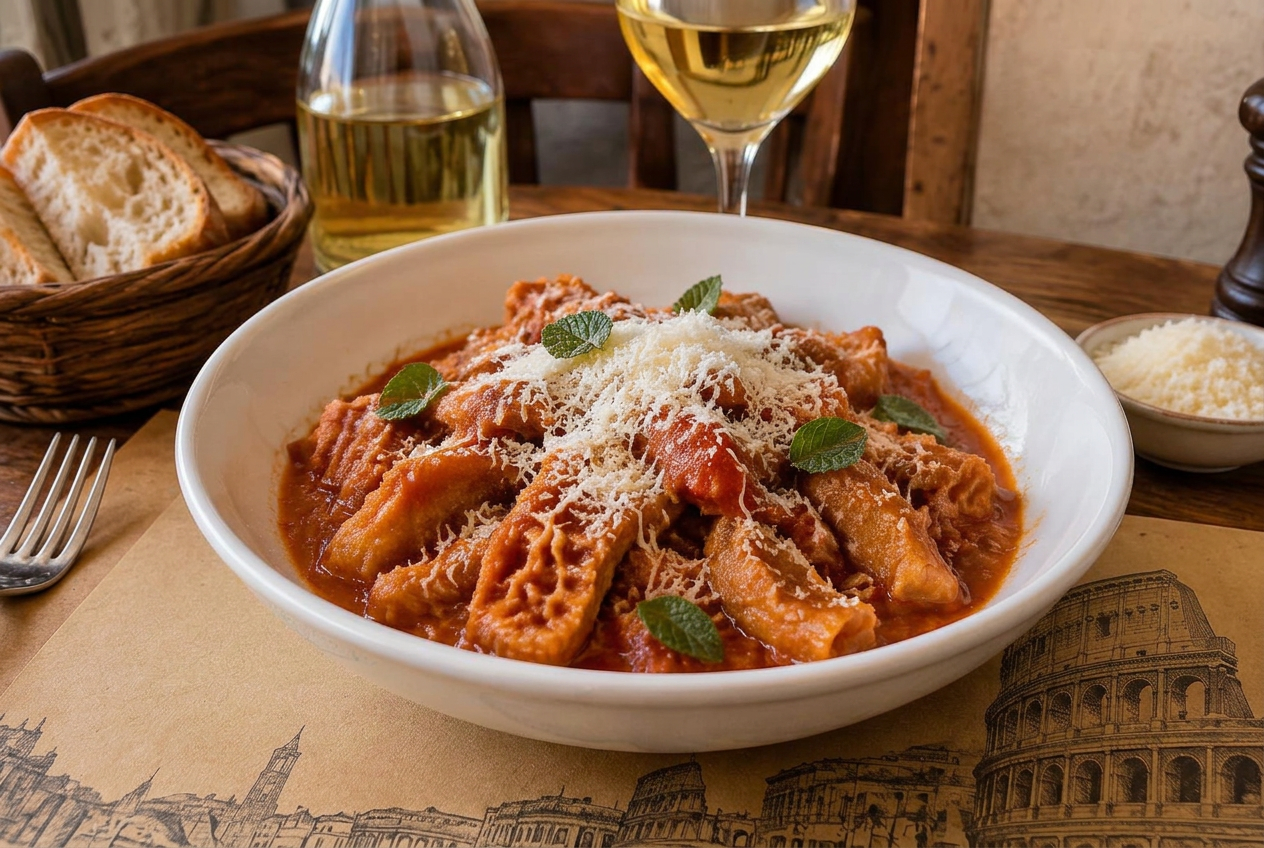
Rome
Trippa alla Romana
Ingredients
- Blanched tripe: 2 lbs (900 g), prepared as above, cut into strips
- Onion: 1 large, finely sliced
- Garlic: 2 cloves, crushed
- Tomatoes: 3 cups (750 g) peeled plum tomatoes, crushed
- White wine: 1/2 cup (125 ml)
- Fresh mint: a generous handful of leaves (mentuccia if you can find it)
- Extra-virgin olive oil: 4 tbsp
- A pinch of chili flakes; salt and black pepper
- Grated Pecorino Romano to finish
Serves four
Preparation
- 1Start the sauce.Soften the onion and garlic in olive oil with the chili flakes until translucent, then add the white wine and reduce.
- 2Tomato.Add the crushed tomatoes and simmer for twenty minutes, until the sauce is no longer watery.
- 3Add the tripe.Fold in the tripe strips, season, cover and cook gently for an hour. Roman tripe should stay a touch looser than Florentine.
- 4Mint, twice.Stir half the mint in ten minutes before the end and scatter the rest, torn, over the finished dish.
- 5Serve.Bowls, pecorino — not Parmigiano — a grind of pepper, and cold white wine.
Venice
Trippa alla Veneziana
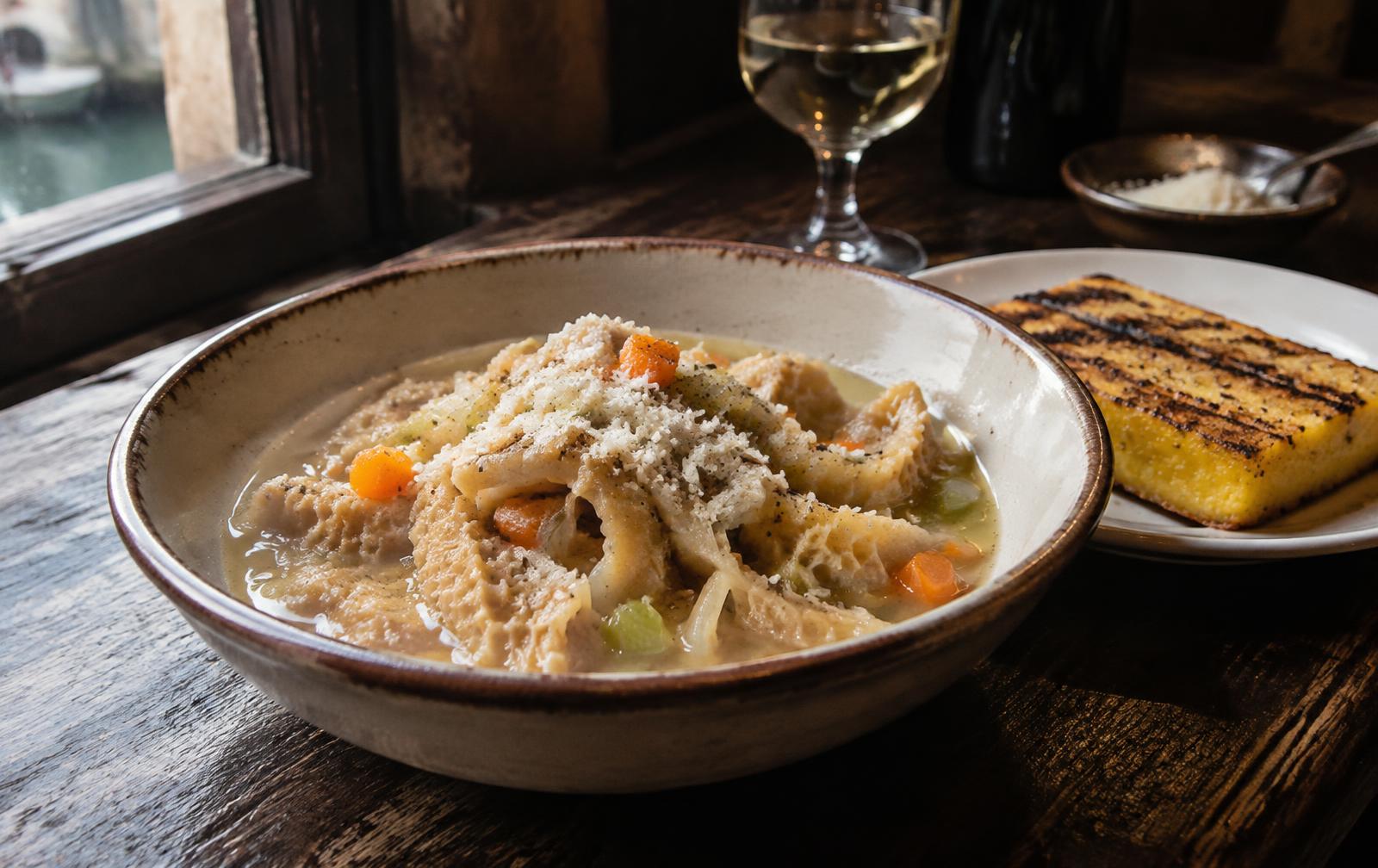
The Venetian version — often called sopa de trippe in the bacari, the old Venetian wine bars — is the outlier and, on a damp cold evening, perhaps the best of the three. No tomato at all: just broth, vegetables, butter and cheese, eaten with grilled polenta.
Ingredients
- Blanched tripe: 2 lbs (900 g), prepared as above, cut into thin strips
- Onion: 1 large, finely sliced
- Carrots: 2, diced; celery: 2 stalks, diced
- Butter: 3 tbsp, plus 2 tbsp olive oil
- White wine: 1/2 cup (125 ml)
- Beef or capon broth: 6 cups (1.5 L), hot
- A bay leaf, a small sprig of rosemary; salt and plenty of black pepper
- Grated Parmigiano-Reggiano and grilled polenta to serve
Serves four to six
Preparation
- 1Sweat gently.Melt the butter with the olive oil and cook the onion, carrot and celery very slowly, without color, for twenty minutes.
- 2Wine.Add the white wine with the bay leaf and rosemary and let it reduce by half.
- 3Broth and tripe.Add the tripe and enough hot broth to cover by an inch. Simmer, uncovered, for an hour and a half, topping up with broth so it stays soupy rather than saucy.
- 4Season late.Salt at the end — the broth and cheese carry most of it — and be generous with black pepper.
- 5Serve.Ladle into deep bowls, finish with Parmigiano and a thread of olive oil, and set slices of grilled polenta alongside.
Make any one of these on a cold Sunday, open something red and Tuscan, and you will understand why Italians look forward to the weather turning.
Buon appetito,