
Style & Craft · Italy
The Silk Around a Man’s Neck
By Roberto da Carrara
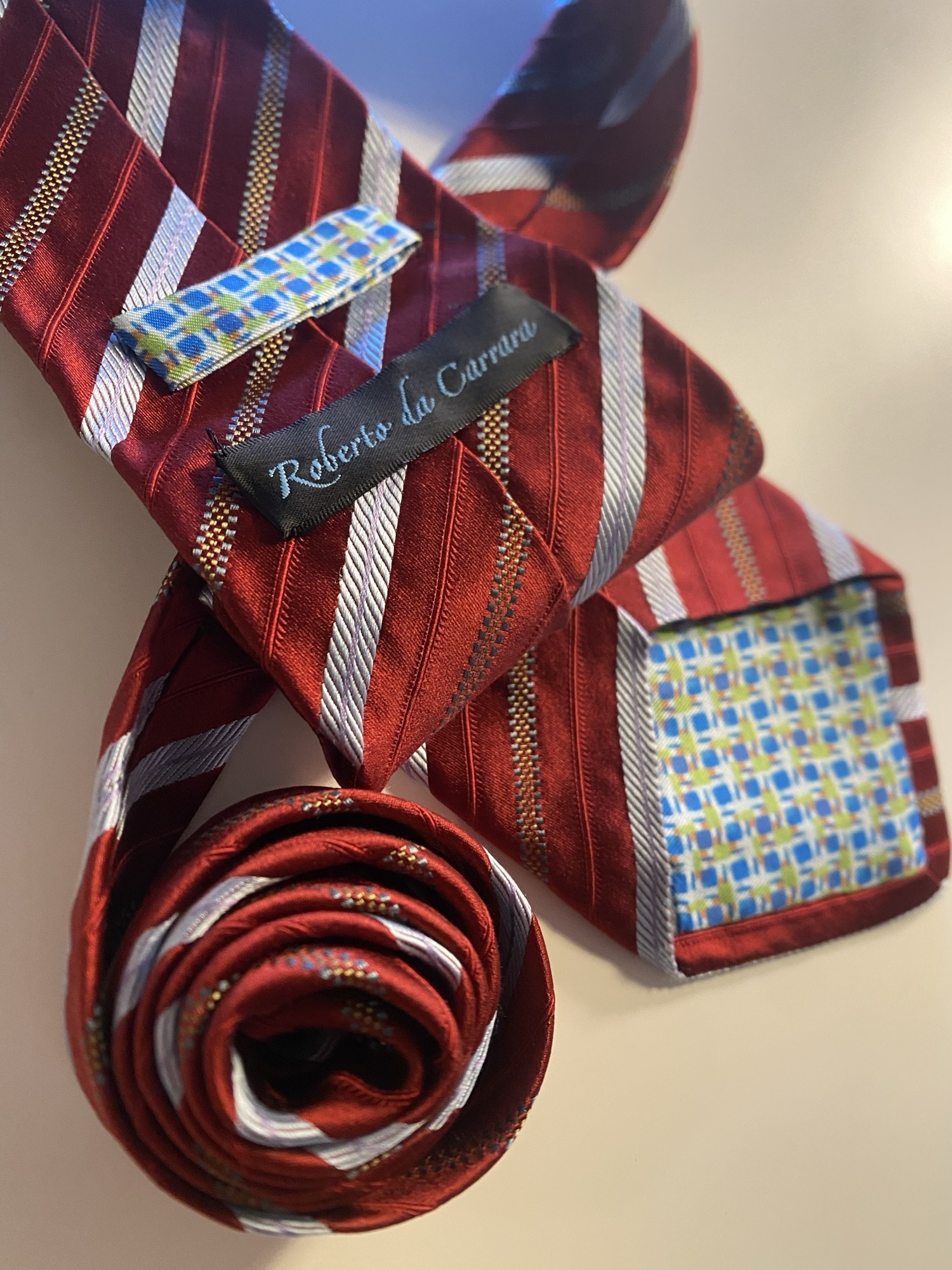
Six centuries of Italian silk, four generations of Neapolitan hands, and the small number of workshops still making ties, squares, scarves and ascots the slow way — with a note on how to wear them.
A short history of a long thread
Almost everything a well-dressed man knots at his throat descends from a military accident. In the 1630s, Croatian cavalry in French service appeared in Paris wearing knotted neckcloths that the court found irresistible; the French called the style cravate, after the mercenaries themselves, and Louis XIV made it permanent by making it fashionable. Every tie, bow tie and ascot since is a variation on that borrowed knot.
The rest of the family tree is nineteenth-century. The starched, elaborately wound linen cravat of the Regency was Beau Brummell’s instrument; by the 1880s European men had loosened it into a wide, folded scarf pinned at the centre and worn with a frock or morning coat — the ascot, named for the Berkshire racecourse where it was obligatory before it was banished. The long tie displaced it in the Edwardian years and never gave the ground back.
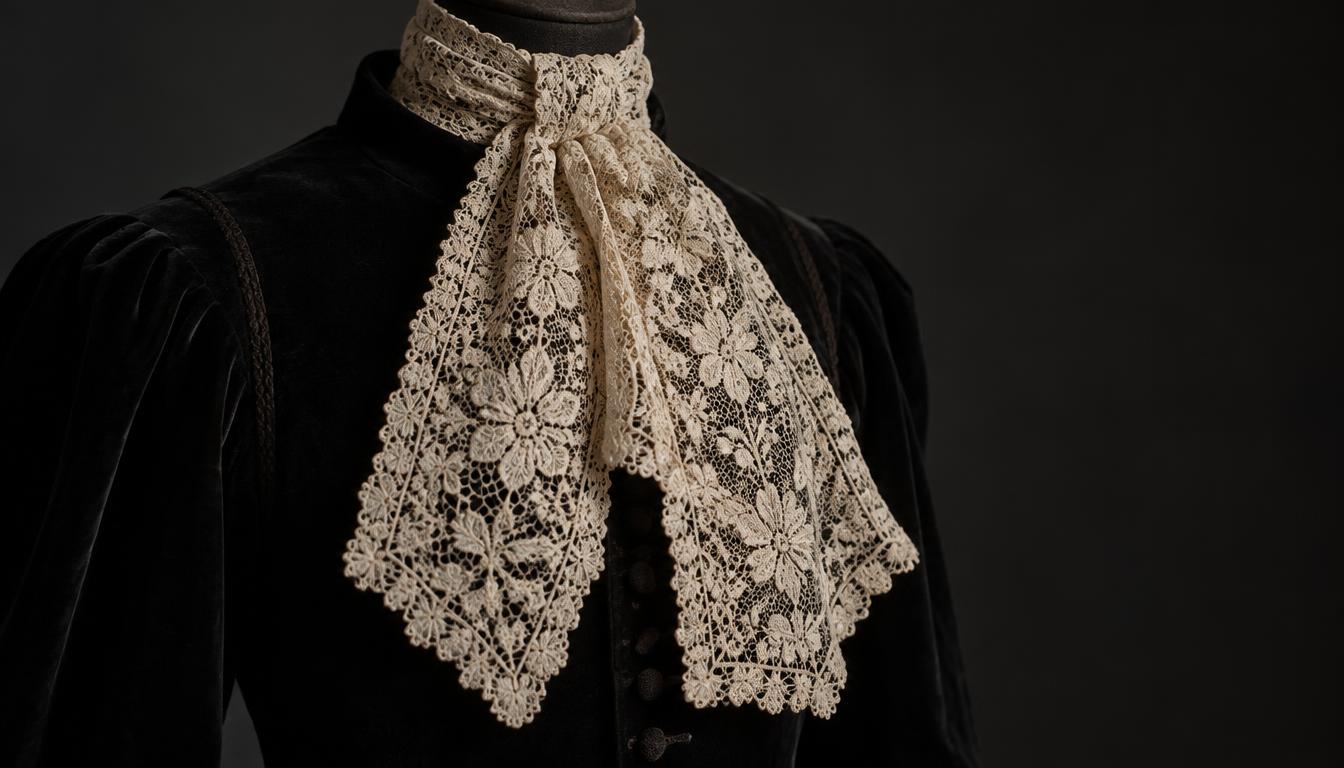
The pocket square arrived from a different direction entirely: a utilitarian handkerchief, dignified by the invention of the breast pocket, which allowed a man to keep something decorative in a pocket he could not sneeze into.
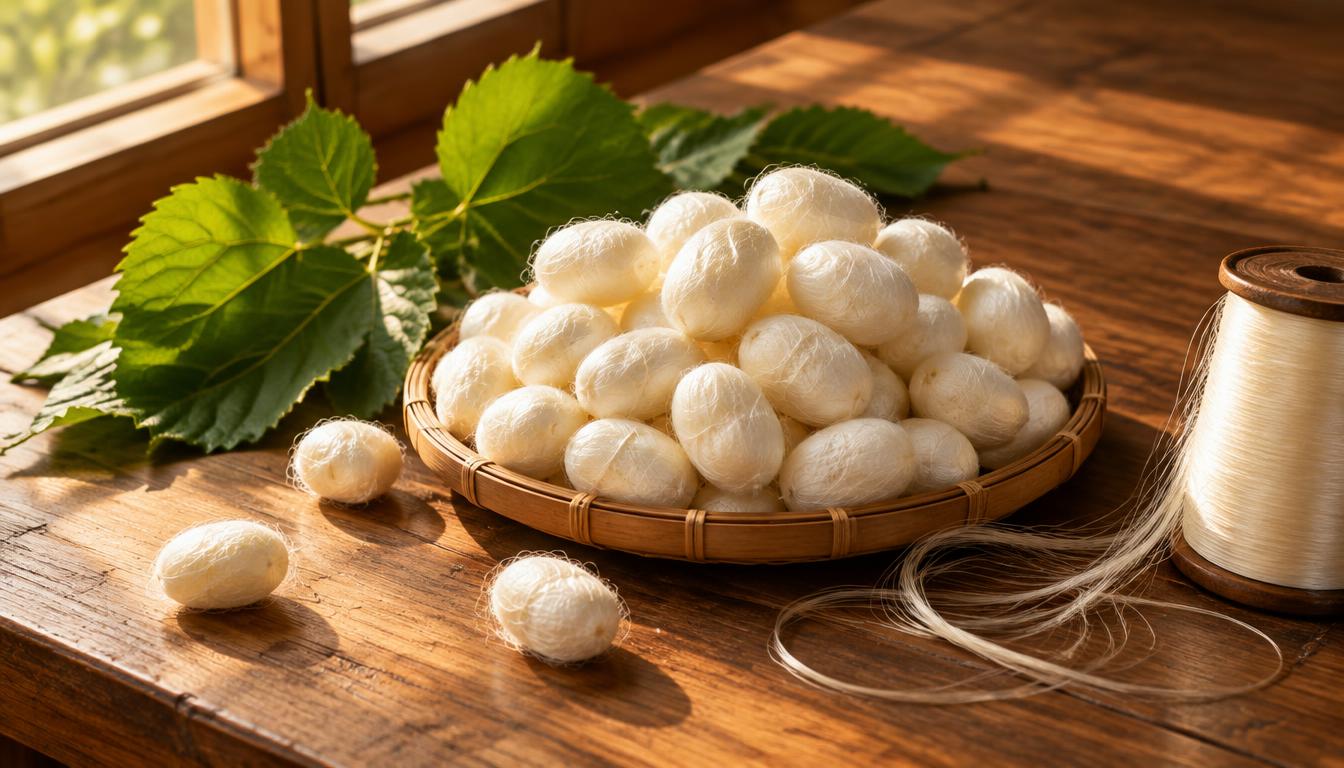
Italy’s contribution was not the knot. It was the cloth. Mulberry was cultivated and silkworms raised in Lombardy as early as the High Middle Ages, and sericulture around Como took shape in the fifteenth century, when the first mulberry trees went into the hills above the lake. Unlike Florence and Venice, which built their reputations on heavy brocades, Como specialised in fine yarn and light weft — the thin, supple stuff that drapes. Its position between Milan and the Alpine passes put it inside the European silk trade early: by the sixteenth and seventeenth centuries Lyonese merchants kept permanent agents in Como to secure supply, and raw Comasco fabric moved to Antwerp and Nuremberg.
The south had its own silk aristocracy, and it was royal. In 1778 Ferdinand IV of Bourbon founded the Royal Colony of San Leucio outside Caserta, converting a hunting lodge into a silk manufactory at the centre of a planned utopian town. The 1789 statutes gave its weavers an eleven-hour day at a time when fourteen was the European norm, along with compulsory schooling and inheritance by merit rather than birth. San Leucio silk clothed European courts. It also seeded a Neapolitan textile culture that outlived the kingdom — and Naples, two centuries later, is where the finest silk accessories in the world are still sewn.
Where the best silk is made
The answer is unusually precise: a district of roughly thirty kilometres around Lake Como. About seventy per cent of all European silk is produced there, across some 1,400 companies employing more than fifteen thousand people, with a district turnover estimated at USD 2.28 billion. Como holds the whole chain — throwing, weaving, dyeing, printing, finishing — which is why a French or English house that wants a particular hand or a particular yellow still telephones Lombardy. It is also why the city was admitted to the UNESCO Creative Cities Network for crafts in 2021, and why the Setificio, founded in 1868 and the oldest textile school in Italy, still trains the designers the mills hire.
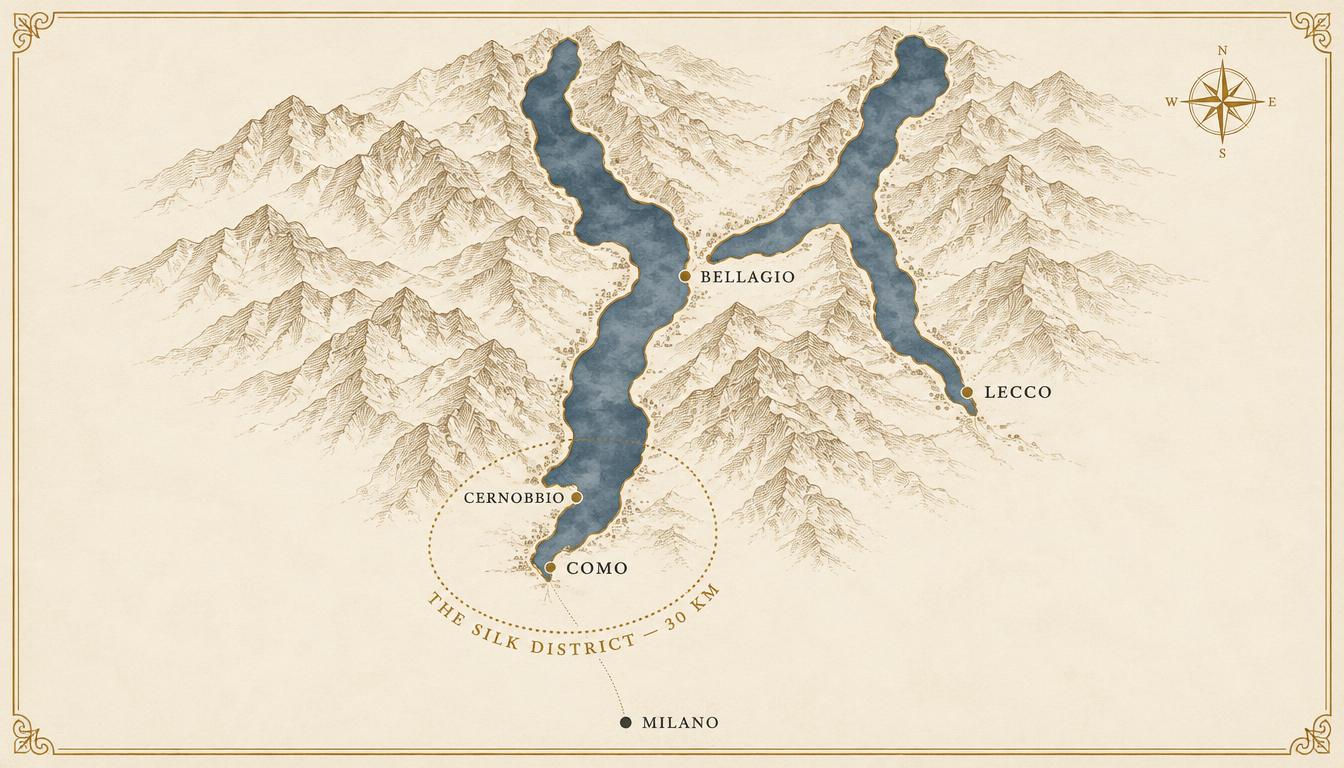
Understanding Italian silk accessories requires holding two cities in mind at once. Como weaves and prints the silk. Naples, overwhelmingly, cuts and sews it. Milan sits between them as the commercial and design capital, and a handful of the best tie workshops have never left it. A tie described as Neapolitan is almost always Comasco cloth in Neapolitan hands — and the finest houses are candid about it.
“Como weaves the silk. Naples decides what it becomes. Neither city has ever quite conceded the other’s importance.”
The mills
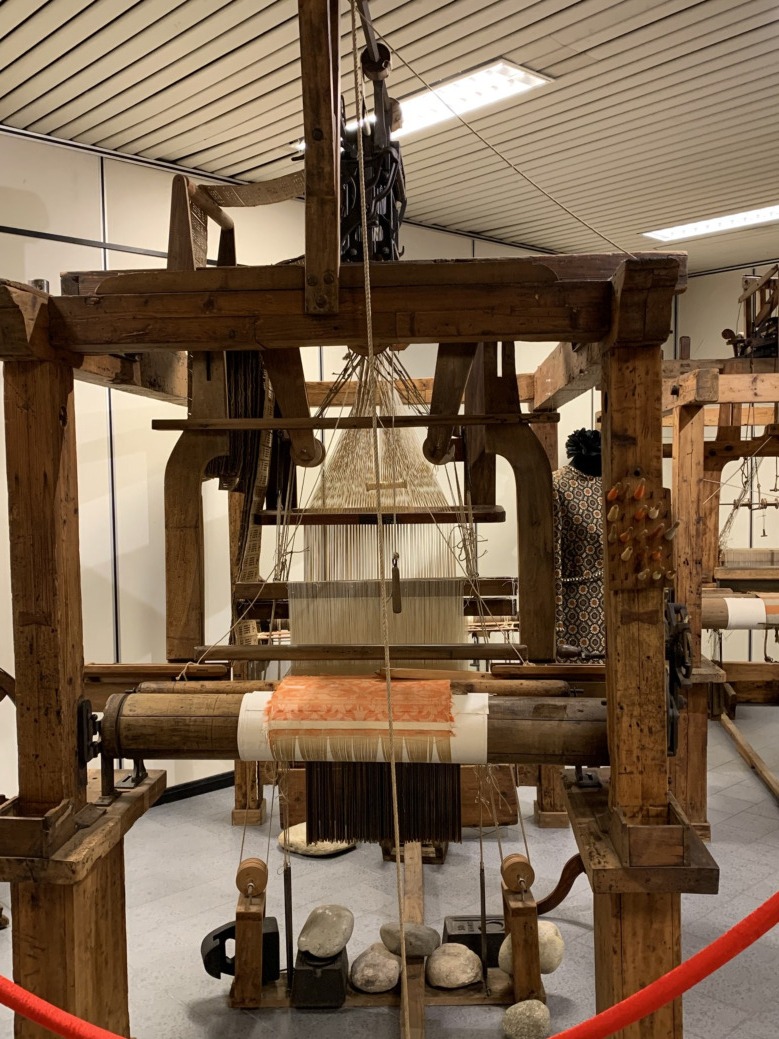
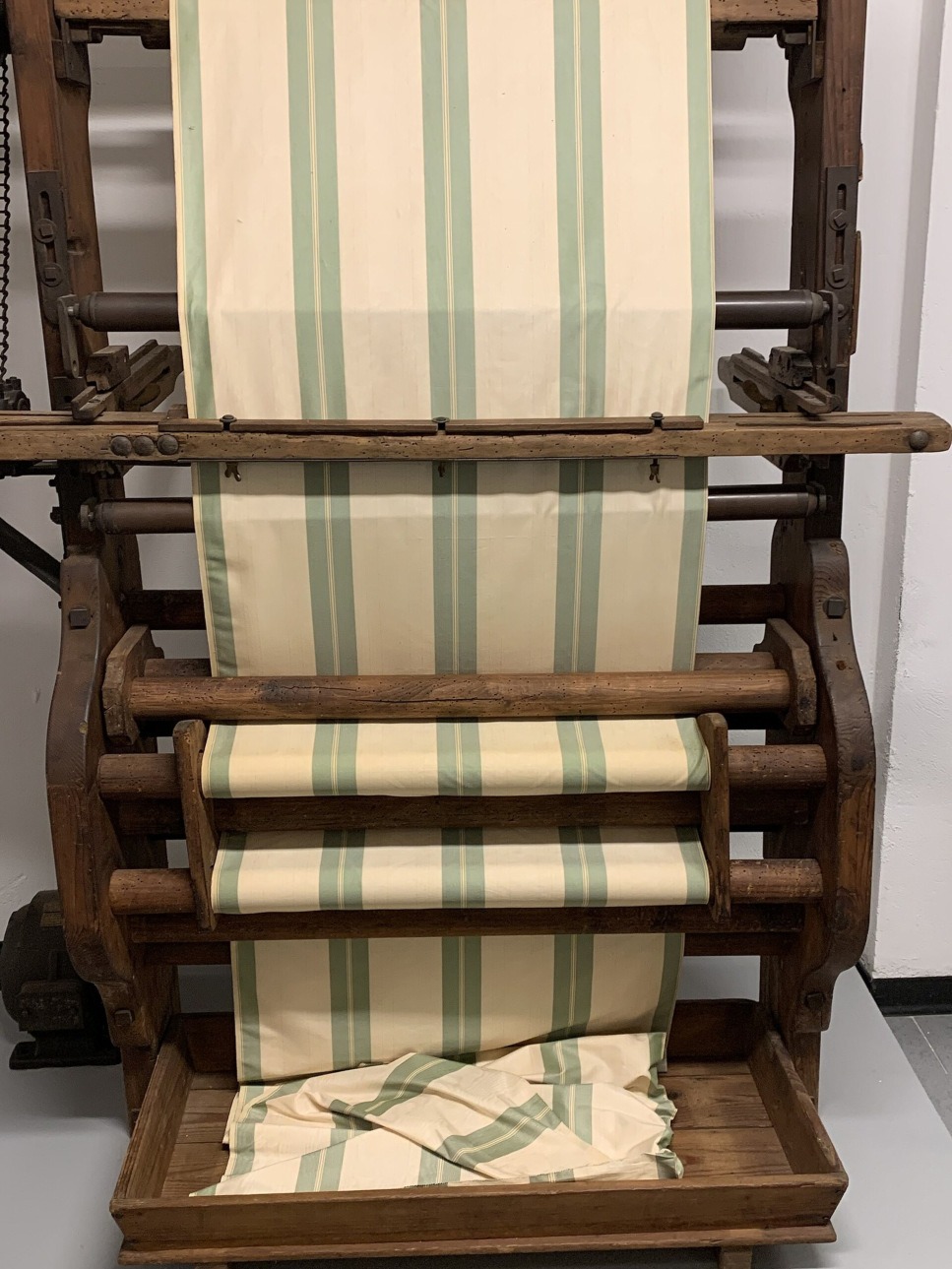
Both photographs via Wikimedia Commons (CC BY-SA 4.0).
Como, since 1902
Mantero
Grandate (Como), Lombardy · Fourth generation
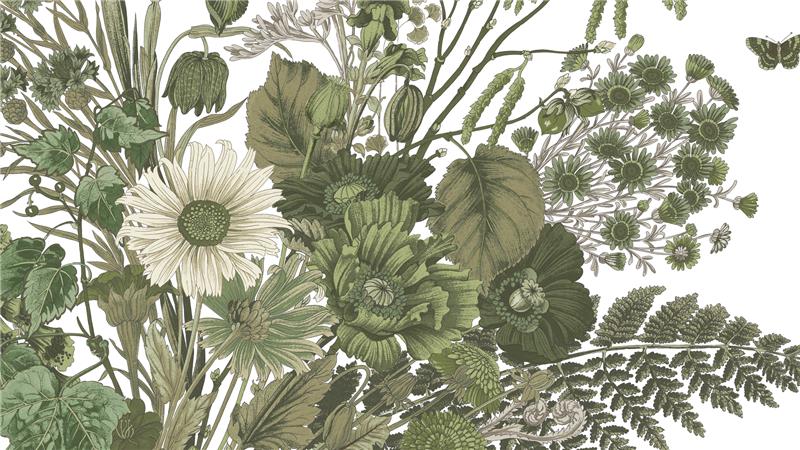
Riccardo Mantero left Novi Ligure for Como in 1902 and began by buying and reselling textiles; he laid the foundation stone of the firm’s Como headquarters in 1922, and the first industrial weaving mill opened in 1940. The house is now in its fourth family generation and supplies the international luxury houses — it is the silk-maker behind Chanel’s scarf work, among others.
For accessories, its most consequential act was commercial archaeology: in 2002 Mantero bought Holliday & Brown, the London house founded in 1926 and long the reference for ascots and printed ties, acquiring its sartorial archive along with the name. An English label, Italian ownership, Como silk. The industry in one transaction.
Como, since 1945

Ratti
Guanzate and Como, Lombardy
Antonio Ratti, born in Como in 1915 to a tailor and a housewife, founded a modest independent printing operation in 1945 and built it into one of the largest silk converters in Europe. Ratti’s significance for the reader is the printing: the depth and register of a well-printed Italian foulard — colours laid down separately, one screen per colour, in exact alignment — is largely a Comasco skill, and Ratti industrialised it without coarsening it. In 1985 he endowed the Fondazione Antonio Ratti in Como to preserve his textile collection, now one of the world’s serious archives of historic cloth.
Milan, then Como
Fumagalli 1891
Como, Lombardy · Italy's oldest continuously operating tiemaker
The line begins in 1850, when Germano Fumagalli opened a Milanese silk-weaving workshop using handlooms exclusively; the firm as it is now known dates to 1891 under Attilio Fumagalli. The archive reads like a social history of the century: gauze ties for lawyers, bankers and doctors before 1900; a commemorative tie for the 1906 Milan Universal Expo and the opening of the Simplon Pass; a 1912 commission from the house of Worth in Paris for ties coordinated with the evening gloves of male opera audiences; the Gold Twill silk of 1947; American orders in the 1950s said to have reached the personal wardrobes of Eisenhower and Kennedy.
Milan, since 1938
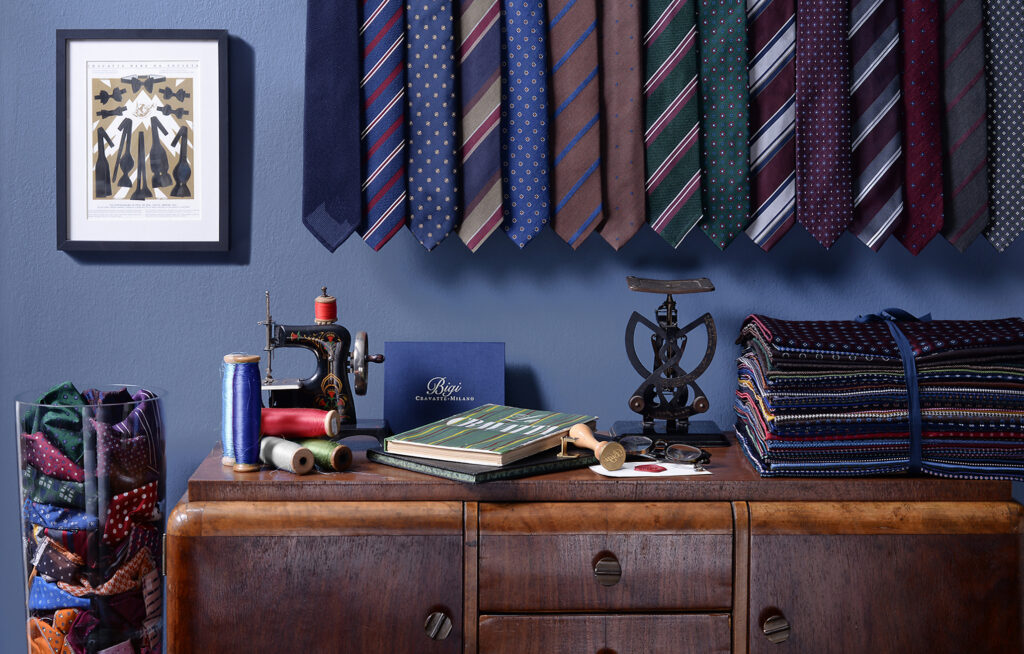
Bigi Cravatte
Milan, Lombardy · Four generations
The Milanese counter-argument to Naples. Luigi Draghi, born in Milan in 1904, founded a tie company in Via Corridoni in 1938 and opened his own workshop in Via Nino Bixio in 1954; his son-in-law Daniele Bigi carried it forward as West Point Manifattura Cravatte in 1976, and the Bigi name was introduced in the 1980s. Paola Bigi joined in 1986 and learned the trade at the bench alongside the workroom staff; Stefano joined in 1989 at twenty-three and has been managing director since 1997. Bigi ties are quieter than Neapolitan ones — a little more structure, a little less flounce — and the workshop is still in Milan, which is now unusual.
The makers
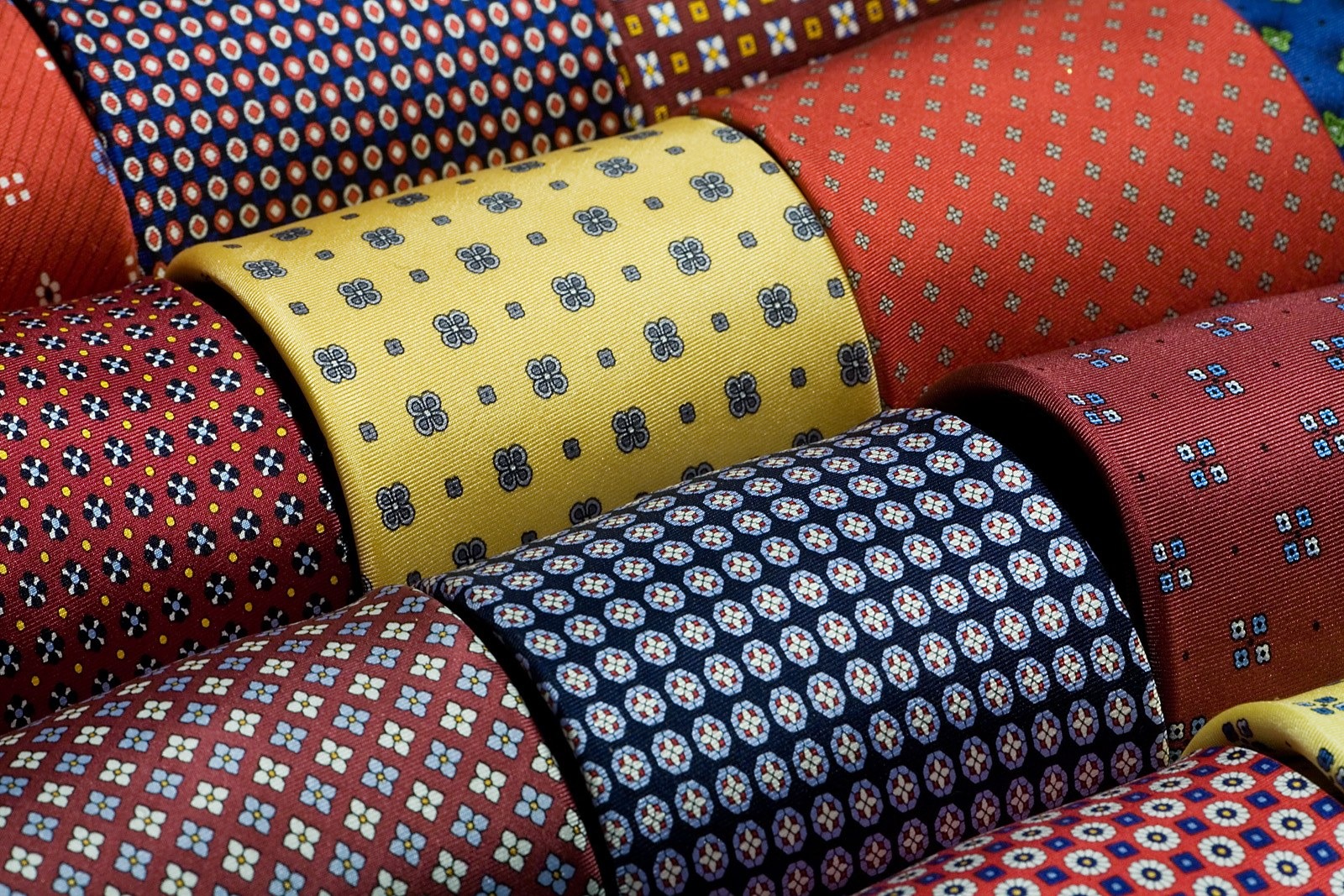
Naples, since 1914

E. Marinella
Riviera di Chiaia, Naples · Fourth generation
Eugenio Marinella opened a shop of twenty square metres on the Riviera di Chiaia in 1914, and the whole point of it was English: he was the first Neapolitan to travel to England to import fine fabrics, aiming — as Matilde Serao wrote — to recreate a little corner of England in Naples. He added two workshops in 1940, one for shirts and one for expertly made ties. The shop is still twenty square metres and still open.
What internationalised the house was diplomatic: in the 1980s President Francesco Cossiga took to presenting foreign heads of state with a box of five Marinella ties on official visits. King Charles III, visiting the Chiaia store in 2017, chose a tie from the 1948 archive — the year of his birth. The ties entered MoMA’s Items: Is Fashion Modern? the same year, and revenue reached roughly €18 million in 2025.
Naples, since 1924
Calabrese 1924
Naples, Campania · Fourth generation
The house began with a dandy rather than a tailor. Don Eugenio Calabrese, a Neapolitan nobleman who owned more than two hundred ties and selected each morning’s according to his mood, was consulted so often on questions of taste that in 1924 he opened a workshop in the centre of Naples to make ties to measure. His son Francesco began exporting to European aristocracy; his nephew Gaetano built the international business, designed and coloured the silks himself, and devised the method of sewing the tipping that the house still uses. Annalisa Calabrese, the fourth generation, joined in the 1990s and now leads it. The signature is softness — Calabrese sources very fine silks and hand-sews them in its own factory, and the results feel almost boneless in the hand.
Naples, three generations
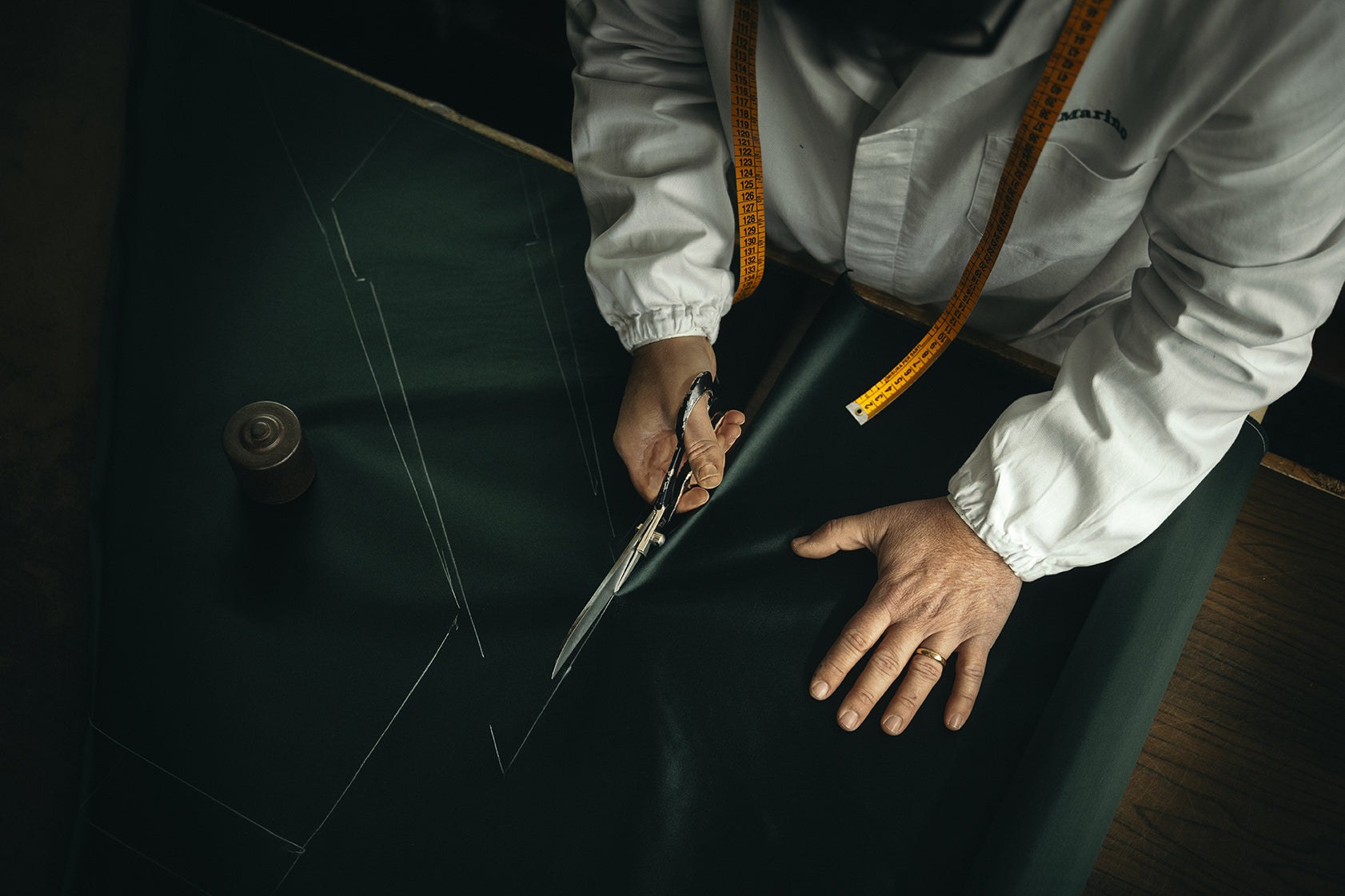
Francesco Marino
Naples, Campania
A small family workshop whose reputation rests entirely on construction rather than marketing. The silks are hand-selected from the north; the ties are made by hand in Naples by methods handed down through the family; and they are frequently untipped with hand-rolled edges — the version of a tie with the least material and the most skill in it. Marino also works to measure, and is one of the few houses where a customer can specify a grenadine in garza fina or garza grossa, a blade width and a length, and receive exactly that.
Naples, since 1932
Rubinacci
Via Filangieri, Naples · Third generation
Mariano Rubinacci’s house is a tailoring institution first, but its silk is a genuine contribution. The famous foulards carry scenes from Neapolitan history and landscape populated with figures of the day, usually designed by Mariano himself. Luca Rubinacci’s seven-fold ties are made on double-printed silk — the pattern printed on both faces, so that the folded interior is as finished as the exterior — with a small piece of natural horsehair canvas set into the neck to give the knot something to bite on. It is a characteristically Neapolitan solution: no lining, but not nothing either.
Milan and Como, contemporary

Serà Fine Silk
Designed in Milan, made in Como
The modern entry, and the useful one for anyone who wants an ascot rather than a tie. Serà designs in Milan and produces in Como from Como silk, across ties, bow ties, pocket squares, braces, scarves and day cravats. Its existence is evidence of something larger: the ascot and the silk neckerchief have returned as open-collar accessories, and the Como district is the only place with the archive, the printing and the hand-rolling capacity to supply them properly.
What makes them the best
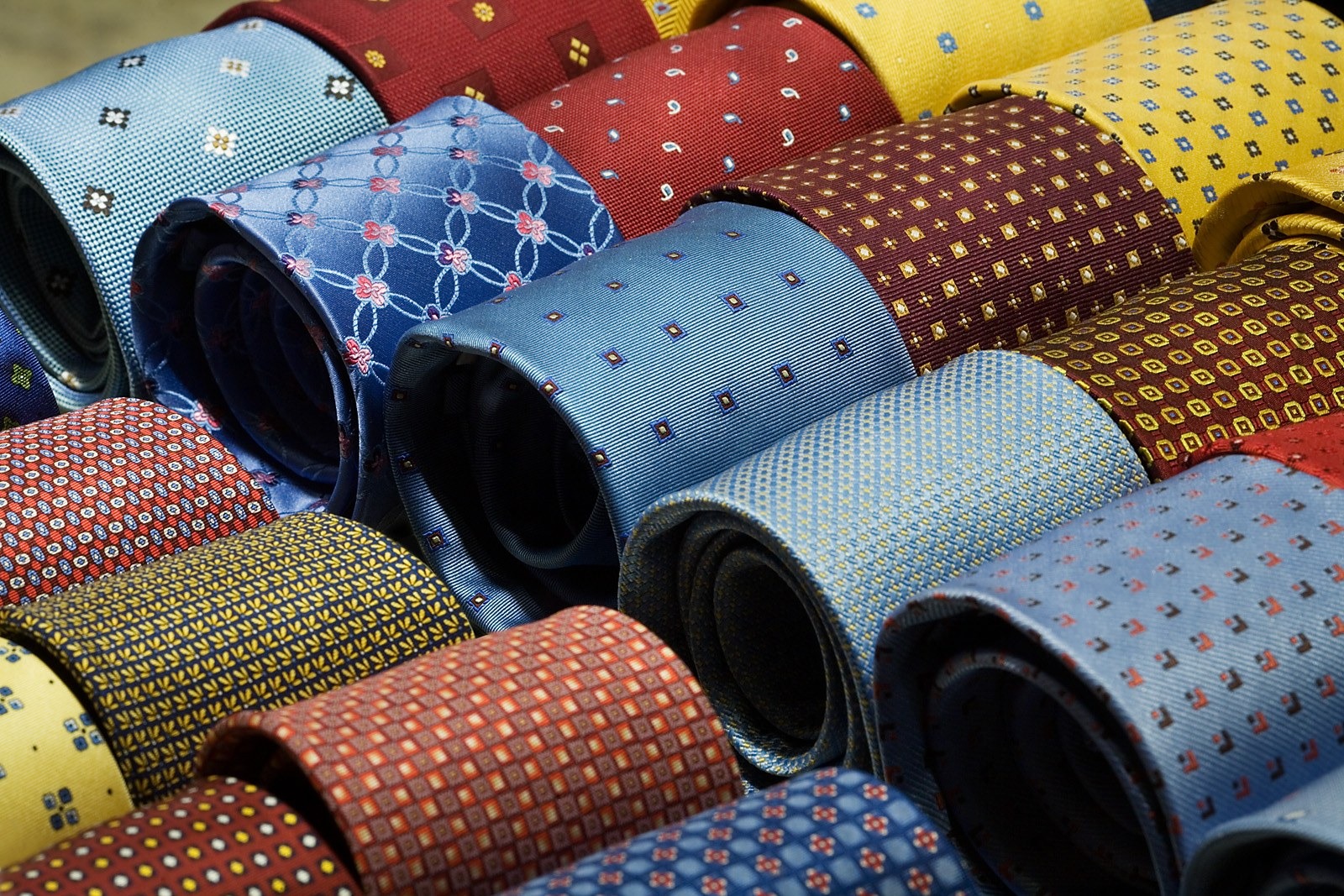
Ask a maker and you will not hear about silkworms. You will hear about five things.
Cut on the bias, at 45°
Silk cut at forty-five degrees to the weave has give in both directions. It is what allows a tie to be pulled into a knot, released, and hang straight the next morning. A tie cut on the straight will twist within a season.
Three panels, not one
A proper tie is three pieces of bias-cut silk joined so the grain runs true along the whole length, and closed with a single slip stitch — a loose thread running inside the length that lets the tie stretch and recover instead of tearing.
Hand-rolled edges, often untipped
The edge is folded and secured by hand rather than pressed flat by machine, which leaves a soft, slightly plump border. Untipped means no contrasting facing at the ends: less material, more skill, and a blade that moves.
Grenadine, a weave and not a print
Grenadine is a leno or gauze weave, made on old looms by only a handful of Como mills: pairs of warp threads are twisted around one another and locked before each pass of the weft, producing an open, airy cloth with a dry hand and a matte finish. Garza fina is the tighter mesh, garza grossa the larger and more open. It is the most useful silk a man can own, because its texture reads as pattern.
Seven folds, or none
The sette pieghe is a single large square of silk folded seven times on itself, with no interlining at all — the bulk is silk and air. It takes two to three times the material of an ordinary tie and considerably more labour, which is the entire explanation of its price.
To that add printing. A hand-printed foulard or tie silk is produced screen by screen, one for each colour, each laid in register by hand; Marinella’s silks have been exclusively hand-printed since well before it was a marketing claim. The test is the reverse side and the edges of the motifs: crisp registration and saturated colour that has penetrated rather than sat on the surface.
How they are worn
One
The navy grenadine, with everything
A navy grenadine in garza grossa, four-in-hand, on a mid-grey or navy suit with a white shirt. This is the single most useful silk object in a man’s wardrobe: the texture does the work a pattern would do, so it sits with checks, stripes and flannels that would fight a printed tie. Sean Connery’s Bond wore a navy grenadine from Dr. No onward, which is as close to a permanent endorsement as menswear offers.
Two
The printed silk, in high summer
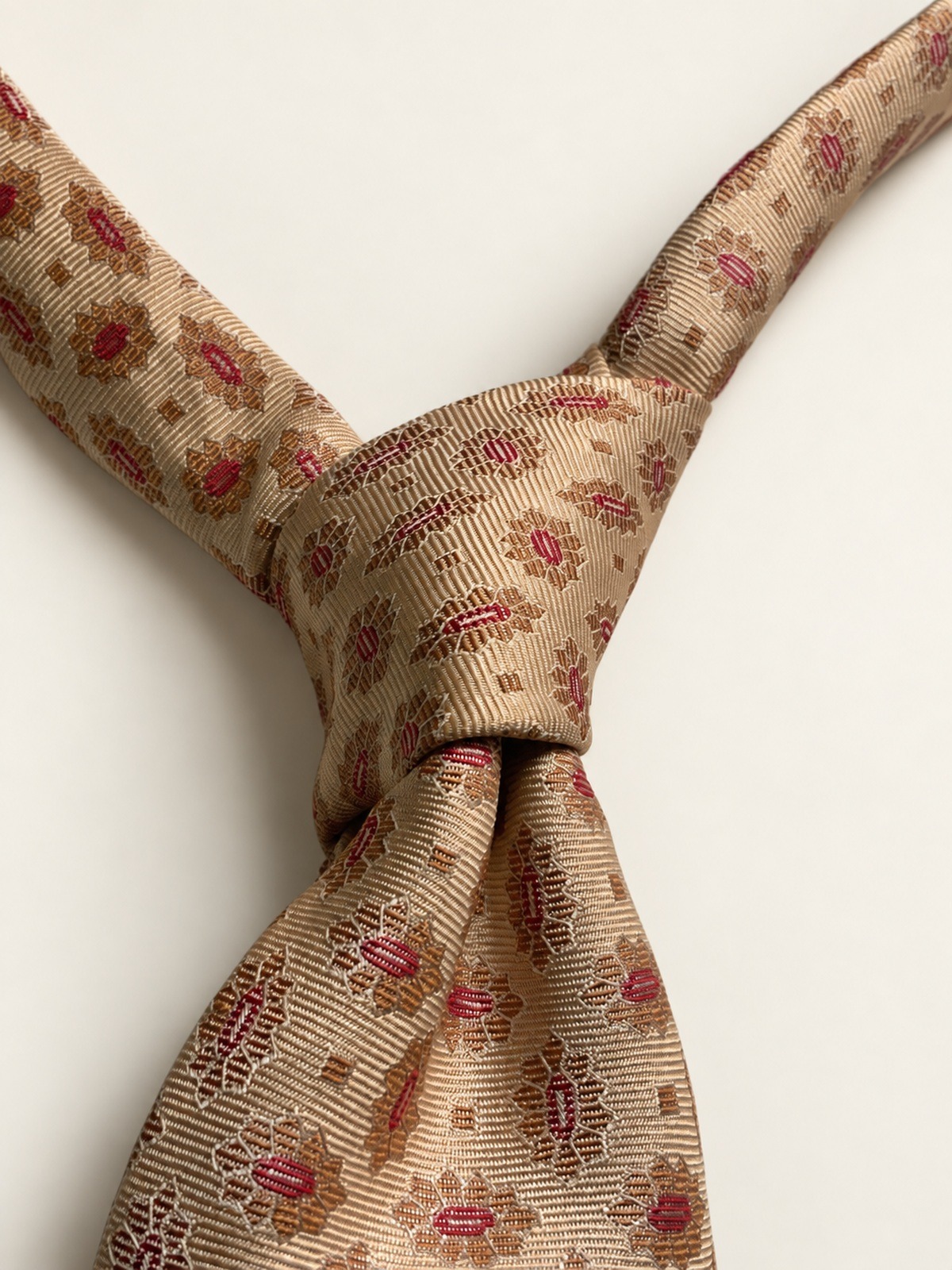
A hand-printed Neapolitan tie — small foulard motif, ground colour warm rather than cold — on a linen or fresco jacket, with the tie deliberately a touch shorter than usual and the knot small. The point of Neapolitan printing is that the colour survives strong light. Wear it with the jacket unbuttoned; nothing about this combination should look pressed.

Three
The pocket square, never matched
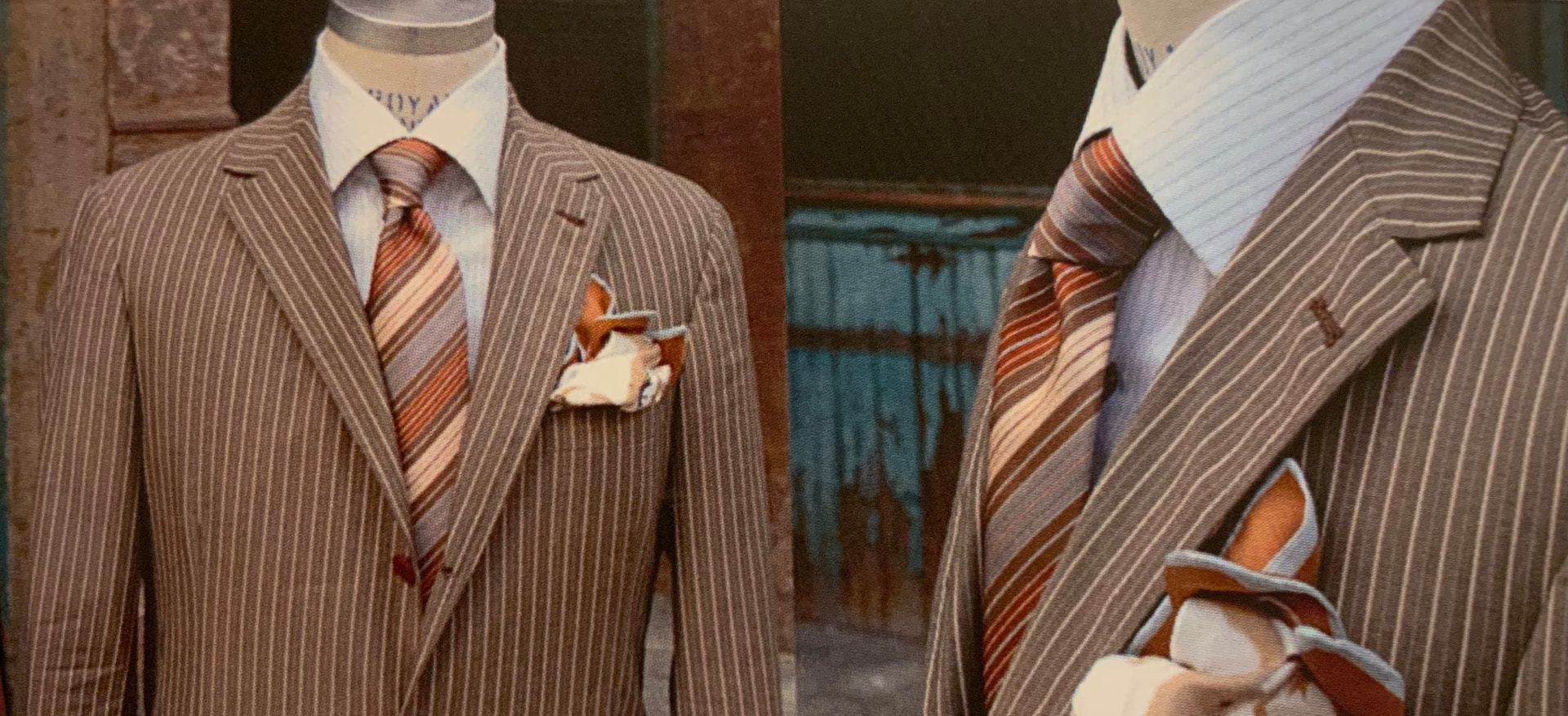
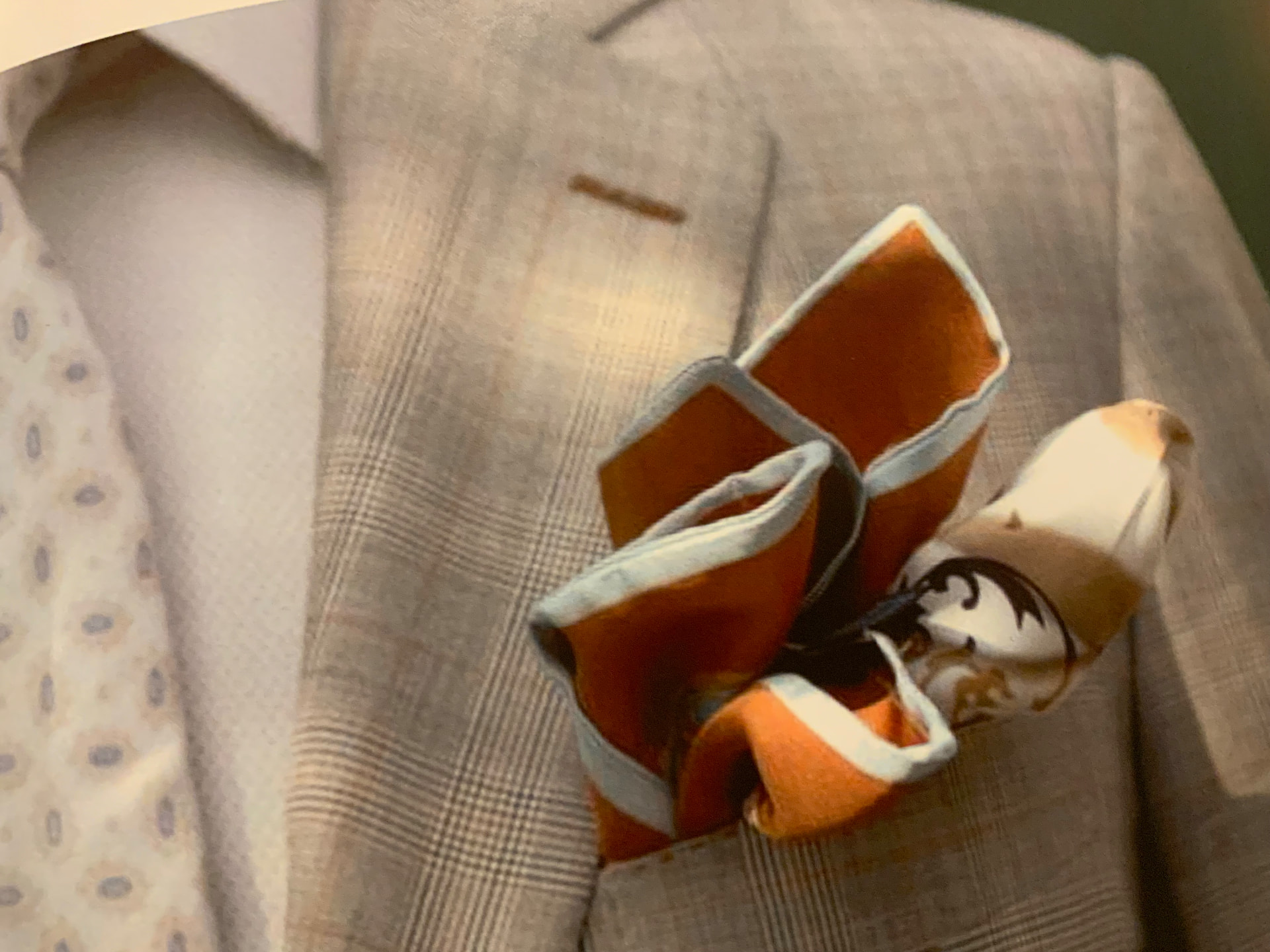
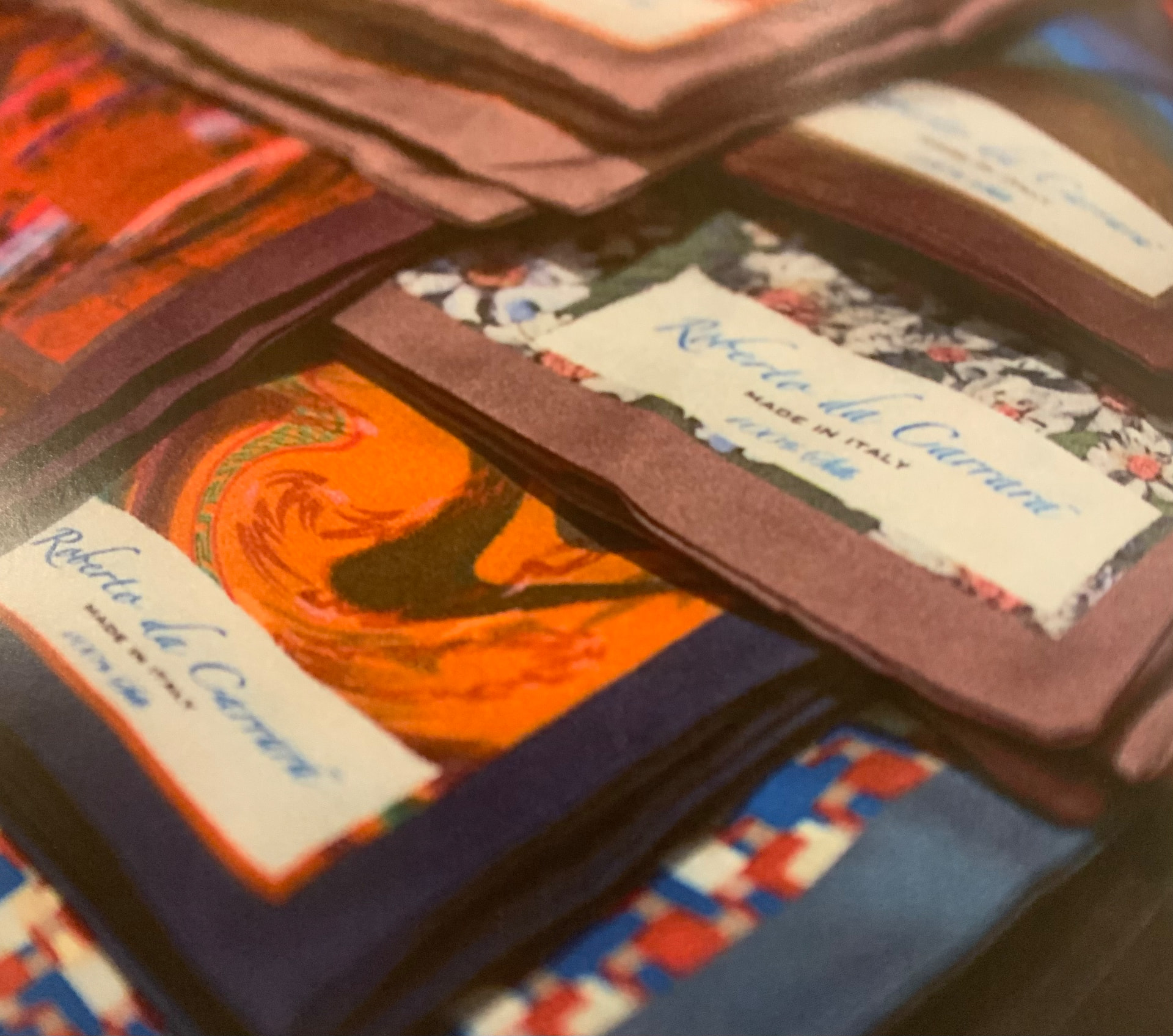
Silk in the breast pocket, and the one firm rule: it must not match the tie. Pick up a secondary colour from the tie, the shirt or the jacket and let the two objects converse rather than duplicate. A printed silk square wants a soft puff — gather it in the centre, drop it in, and let the folds fall as they will. Reserve the flat, straight-edged fold for white linen with black tie, where silk would be too shiny and a fold too casual.
Four
The ascot, in its two lives
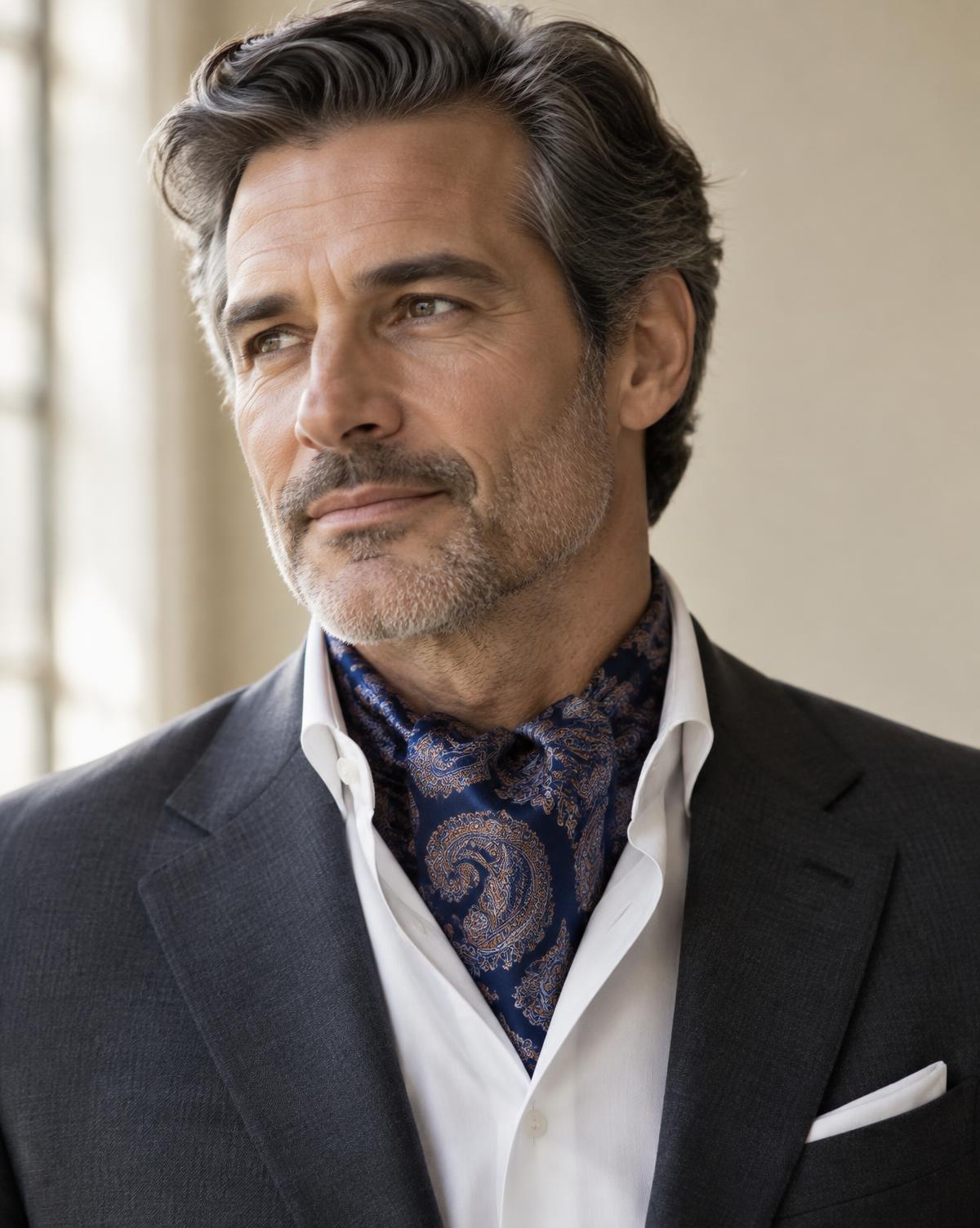
The formal ascot is a survival: patterned silk, wide ends crossed and pinned with a stickpin, worn with morning dress at daytime weddings and almost nowhere else — and famously banned from the Royal Enclosure at the racecourse that named it. The day cravat is the living version: a lighter, thinner woven silk, more comfortable against the skin, tucked inside an open shirt collar under a blazer or a knitted jacket.
Two conditions make it work rather than embarrass. Keep it plain or small-patterned in a colour close to the shirt, and keep the collar soft and unbuttoned. It is a substitute for a tie, not an addition to one.
Five
The long scarf, over the coat and under it
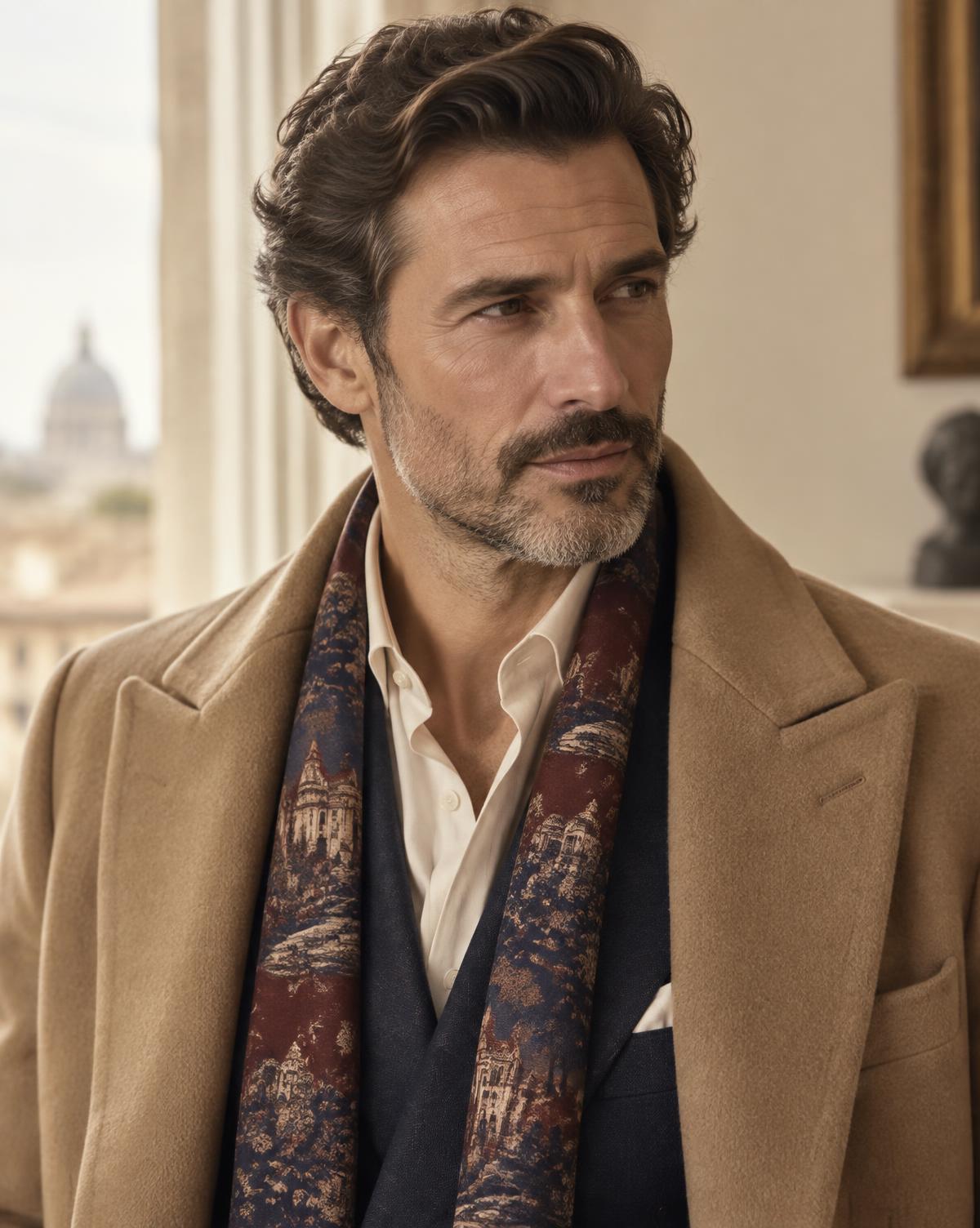
A printed silk scarf worn under an overcoat, flat against the chest inside the lapels, is warmer than it looks and the most elegant use of a foulard a man has. The Rubinacci-style scene print is designed for exactly this — the pattern is meant to be read in fragments. And the formal case: a plain white silk scarf, ends hanging loose, with a dinner jacket and an overcoat. Serà makes them in white, black and burgundy for precisely that purpose.
Six
The knot, left slightly imperfect
Naples has one final instruction, and it is philosophical. The dimple below the knot should be there, and the knot should not be symmetrical. A tie made of silk and air, cut on the bias and closed with a slip stitch, is built to move; pulling it into a hard, geometric triangle wastes everything the maker did. Tighten it properly, then leave it alone.
“The two claims that mean the most are the least advertised: bias-cut construction with a hand-rolled edge, and silk woven in the Como district.”
A note on buying. The two claims that mean the least are a designer’s name on the keeper and the word seta printed on a label. Ask where the cloth was woven and where the tie was sewn. Every house named in this article will answer both questions without hesitating.